from plucking hair to wearing corsets so tight their bones shift, the western europeans! today we are looking at different Medieval Woman’s head wear, which will be….. interesting.
8 min read time
the hennin
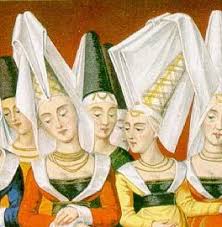
typically a long cone shaped hat, the hennin was a popular choice of Head wear for many. it began rising to fashion in the 1230’s, before being Abandoned in Favour for more conservative choices in the early 16th century.
it was typically made out of lighter materials, such as card covered in a light fabric or wire mesh, sometimes with a vail Erupting from the top of it. it’s popularity grew from france and burgandy before spreading to the english courts and many other countries in europe.
the Hennin was usually very tall, specifically made to make it’s wearer look like she’s grown several feet. there are some stories that describe the hennin as making it’s wearer 12ft tall.
examples
The escoffion
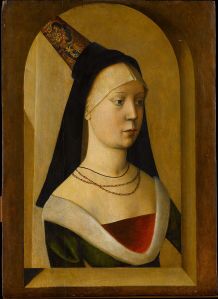
the escoffion, yet another interesting piece often confused with the hennin due to the fact they both gained popularity during the same time. the escoffion had a tendency to be much wider than the Hennin, and often in more unusual shapes. and whilst they were both Extravagant, the were both Extravagant in there own unique way.

the 15th century was a rise in large headpieces, with ladies really getting creative with it. although the exact area the escoffion rose to fashion is unknown, we do know that it was mostly worn in western europe and other Balkan states. typically it was made out of a felt, wool or silk rolled and tied up into a thick circular roll.
examples
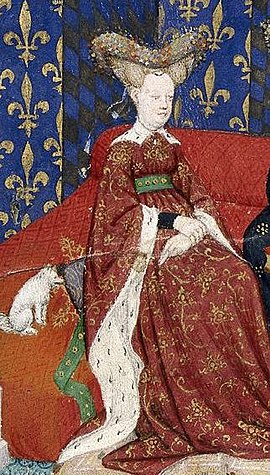

as shown in the images above both escoffion’s and hennins were typically worn by ladies of high class and wealth as a way of showing their standing. escoffions were commonly designed in elaborate shapes, patterns, colours and styles.

wimples
the wimple, a Headpiece still used today. deriving from the hijab, the wimple is also used to cover hair, except in modern times that hair is usually the hair of nuns.
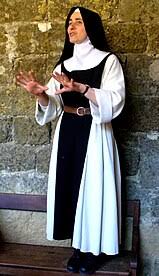
but lets’s jump back and have a look at where it’s use started in europe! we can see that hundreds of years ago, when the europeans came back from the crusades they bought with them the hijab style, which then began being used by european women as a wimple.
see, in those days most married women in europe were expected to wear a head covering, and the wimple was perfect for it. used from farmers to queens, the wimple was a sign of modesty.
for the working classes it was made out of plain wool and linen, which although rough it Would’ve ensured that it’s wearer stayed warm in the freezing rain and awful elements. for the more wealthy it was most likely made of silk, as they had no need for protection. and whilst usually there are clear differences between the poor and wealthy pertaining to the colours and patterns worn on their clothing, the wimple was more often than not plain. in modern times nuns commonly wear wimples made from cotton, starched linen or polyester.
in the late 1500’s italian women started to prefer Intertwining their hair in Extravagant plaits, which the wimple Unfortunately wouldn’t let them show off. so women started wearing their hair out.
examples

barbette
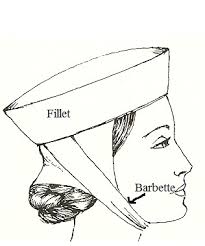
the barbette, a chinstrap commonly used to keep hats on. often shown in Medieval depictions of queens as they wear crowns. a Useful tool, enabling the wearer to walk around and do activities comfortably without fear of their hat or headdress falling off.

whilst wearing the hair was usually tied up in a crespine, a type of net only visible from the back of the headdress. the barbette was commonly made with linen or wool for the lower classes whilst the wealthy wore fine silk. whilst at first the barbette was a thick piece of cloth tied round the chin, in the late 1300s it was reduced to a simple strip of cloth. the barbette was typically white whilst the crespine, that was almost always worn with it, was sometimes died gold.
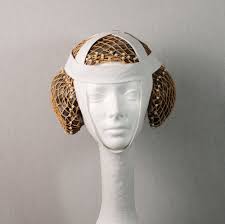
the barbette was often worn with a fillet (image down below) a type of hat that looked similar to a fabric crown, with some examples of it being quite tall. they were also often used with a straw hat, an easy piece of Head wear to create, usually used by people out in the sun all day as a way of keeping cool.
so all though those weren’t all the options in relation to head wear worn in europe, as many cultures have specific cultural head wear and there are many different medieval Headpiece types, i hope you enjoyed reading abut a few of them.
sources: themet.com, medievalbritain.com, wovenhistory.com, onyerhead.com
 The mabinogi
Leave a comment